
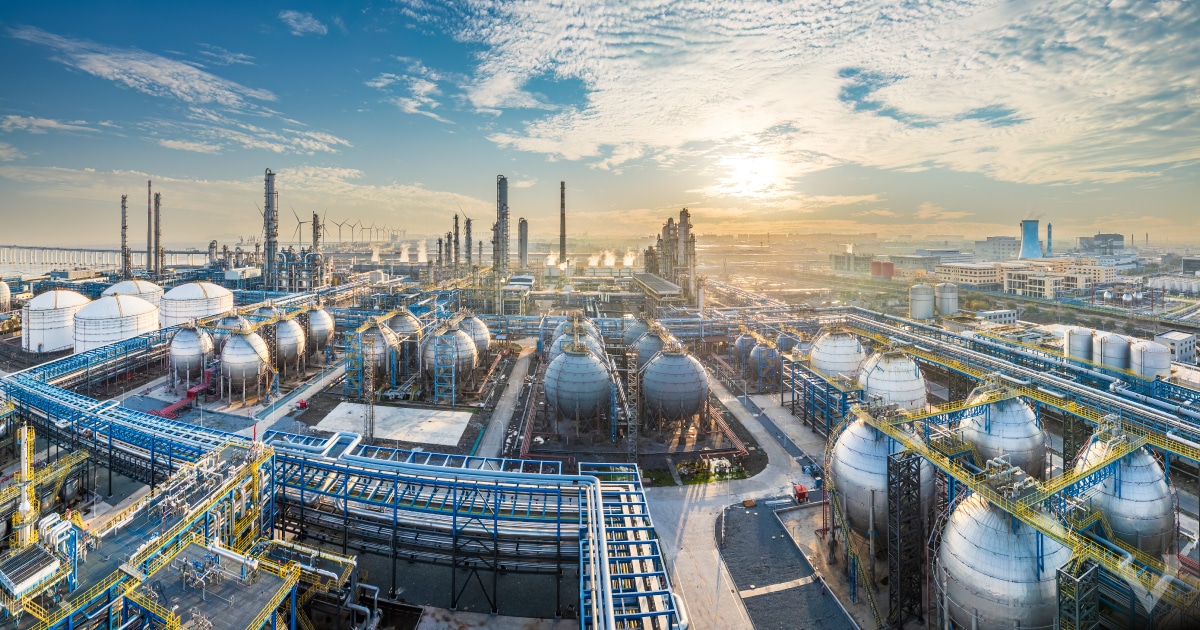
Critical vessels are key process units in chemical and refinery operations. They typically handle high pressures, temperatures, or hazardous materials, meaning failure could result in the release of toxic chemicals, fire, explosions, or runaway reactions.
Facilities use a variety of tools to monitor the health and performance of critical vessels and to ensure their integrity. However, many of these technologies are limited in their effectiveness, increasing the risk that a minor fault goes undetected until it grows into a more significant failure.
Continuous Critical Vessel Monitoring solutions overcome many of these limitations by providing operators with greater access to temperature and performance data. These highly versatile, vessel-agnostic solutions can be used across a range of applications to enhance safety, optimize operations, and reduce maintenance costs.
This article is part of a series on Continuous Critical Vessel Monitoring. To learn more, download our white paper: Improving Safety and Reliability in Petrochemical Plants With Continuous Critical Vessel Monitoring.
Introduction to Critical Vessel Monitoring
Critical vessel monitoring is a cornerstone of safe and efficient operations in the petrochemical industry. Facilities depend on critical vessels, such as reactors, distillation columns, and storage tanks, that operate under extreme pressure and temperature conditions. Any failure in these vessels can lead to significant safety hazards, environmental incidents, and costly downtime. By implementing continuous monitoring, companies can detect early signs of equipment failures and take proactive steps to prevent them. Advanced technologies, including smart sensors and predictive maintenance systems, enable operators to track critical parameters in real time, optimize maintenance schedules, and reduce maintenance costs. This approach not only safeguards equipment and personnel but also enhances production efficiency, making critical vessel monitoring an essential practice for modern petrochemical companies.
The Petrochemical Industry and Monitoring
Operating in a high-stakes environment, the petrochemical industry faces unique challenges when it comes to equipment reliability and safety. Unexpected downtime can result in severe safety risks, environmental hazards, and substantial financial losses. Traditional maintenance approaches, such as reactive maintenance, often lead to unnecessary repairs, shortened equipment life, and increased maintenance costs. In contrast, predictive maintenance strategies, supported by critical vessel monitoring, allow maintenance teams to identify potential failures before they escalate. By enabling timely interventions, companies can avoid equipment failures, reduce downtime, and optimize maintenance schedules. This shift from reactive to proactive maintenance not only improves safety but also ensures more efficient use of resources, supporting the long-term sustainability of petrochemical operations.
Deploying and Using Continuous Critical Vessel Monitoring Solutions
Continuous Critical Vessel Monitoring solutions leverage advanced thermal and visual cameras to provide 24/7 coverage of the entire vessel. These monitoring systems are compatible with a wide range of existing infrastructure and can integrate seamlessly with various manufacturers’ equipment, ensuring reliable real-time monitoring and fault detection.
Operators can measure temperature, rate of change, and temperature differential (min/max/average) to immediately detect temperature anomalies and hotspots that could indicate a potential fault. The data collected by these systems includes real-time temperature readings, which can be analyzed for trends and predictive insights using AI and machine learning techniques.
The ruggedized, HazLoc-certified sensors are designed specifically for Class I and Class II environments, and because they don’t come into contact with the vessel, they are easy to install, maintain, and use.
Typically, petrochemical companies start with a pilot program to better understand the solution’s capabilities and how it fits into their broader Asset Integrity Management Strategy. Real-time remote monitoring is particularly beneficial for facilities with large infrastructure, as it improves maintenance efficiency and prioritization. To gain the most immediate benefits, consider deploying the pilot program in a facility with known issues or with aging equipment that requires more frequent maintenance.
From there, the solution can be rolled out to more production processes and plants, providing operators with a complete view of their facilities from a centralized system that centralizes monitoring and data analysis. Temperature data loggers can be equipped with wireless connectivity for remote monitoring and data access, and can provide alerts when temperature thresholds are exceeded to help prevent spoilage or damage to sensitive products. For example, temperature data loggers are often used in cold chain management to ensure that products are stored and transported at the correct temperatures.
Role of Smart Sensors in Monitoring
Smart sensors are at the heart of effective critical vessel monitoring, providing maintenance teams with real-time data on equipment performance, temperature, pressure, and vibration. These sensors continuously collect and transmit data, allowing operators to detect patterns and identify early warning signs of potential failures. By integrating smart sensors with technologies like thermocouples, companies can achieve high accuracy in monitoring critical parameters. The compatibility of smart sensors with existing systems makes them a flexible solution for upgrading monitoring capabilities. Leveraging this real-time data, maintenance teams can make informed decisions, reduce downtime, and enhance production efficiency, ensuring that critical equipment operates reliably and safely.
Technologies Used in Monitoring
A range of advanced technologies underpins modern critical vessel monitoring systems. Predictive maintenance utilizes sophisticated algorithms and machine learning to analyze data from smart sensors, thermocouples, and other monitoring devices. Real-time monitoring platforms process this data to detect patterns and predict potential failures, providing valuable insights into equipment health. By harnessing these technologies, companies can optimize maintenance schedules, reduce maintenance costs, and improve overall safety. The integration of predictive analytics and real-time data empowers operators to make proactive decisions, ensuring that critical vessels remain in optimal condition and minimizing the risk of unexpected equipment failures.
Early Fault Detection and Warning
While traditional approaches to Critical Vessel Monitoring provide some insight into the health and performance of the vessel, the lack of continuous coverage means that some issues may go undetected until it’s too late. Early detection of faults is crucial for preventing failures and improving safety, as it allows operators to address issues before they escalate.
Continuous Critical Vessel Monitoring solutions detect intermittent or localized temperature fluctuations under a range of operating conditions long before pressure or process alarms are triggered. The thermal cameras provide real-time, full-surface thermal visibility, allowing operators to detect subtle deviations that may precede failure. Thermal imaging provides a full picture of potential problems, including areas between thermocouples that are often missed, and these cameras can provide instantaneous non-contact temperature measurements. Thermal imaging systems are designed for hazardous environments and provide maximum protection to plant personnel and equipment.
By detecting temperature anomalies, predictive maintenance enabled by continuous monitoring helps detect problems before failure occurs, reducing downtime and avoiding delays in production. Predictive maintenance significantly reduces unplanned downtime by allowing companies to identify and address issues before they result in equipment failure. It also enhances workplace safety by predicting and preventing equipment failures that could lead to dangerous situations, resulting in improved safety for workers. The adoption of predictive maintenance offers numerous benefits for petrochemical companies, including reduced downtime, improved safety, and optimized maintenance costs. Real-time monitoring and advanced analytics enable companies to predict equipment failures before they happen, ensuring smooth operations. Predictive maintenance also helps extend the lifespan of critical assets by allowing maintenance teams to replace or repair components before they cause further damage.
Condition-Based Maintenance
Scheduled maintenance, as the name suggests, is performed at regular intervals based on historical maintenance records or usage levels. While this can reduce the likelihood of failure, it also leads to unnecessary or premature maintenance. Predictive maintenance, enabled by temperature data monitoring, uses data-driven insights to detect anomalies and predict failures before they occur, allowing timely interventions and reducing the risk of unexpected equipment breakdowns.
Continuous Monitoring allows petrochemical companies to transition toward a Condition-Based Maintenance strategy. Rather than conducting maintenance on otherwise healthy equipment, operators can trigger maintenance at the most cost-effective times based on the actual condition of the asset. By optimizing maintenance schedules using real-time equipment condition data, companies can reduce maintenance costs, extend the lifespan of critical assets, and ensure maintenance is performed only when needed, minimizing unnecessary repairs. Predictive maintenance also reduces unplanned downtime and improves production efficiency by minimizing unexpected stoppages.
Process Optimization
Continuous Critical Vessel Monitoring serves an important role in improving safety. However, it should not be viewed solely as a safety measure. Implemented effectively, it can also serve as a powerful process optimization and performance enhancement tool. Advanced technology, such as smart sensors, is now integrated into monitoring systems to optimize industrial processes.
These systems monitor not only temperature but also critical parameters like pressure and flow rates, including the monitoring of valves and machinery. Smart temperature sensors provide real-time data on equipment performance, ensuring that machines operate within safe limits. The data generated by smart sensors provides valuable insights into operational efficiency and enables early detection of potential failures. The adoption of smart sensors in industrial processes enhances safety by predicting and preventing equipment failures.
Continuous Critical Vessel Monitoring supports process optimization by providing real-time, full-field thermal data that reveals how efficiently heat and reactions are distributed within and across a vessel. Thermal cameras can detect temperature profiles that indicate process inefficiencies. By trending these patterns over time, plants can optimize fuel usage, stabilize product quality, and improve yield, all while minimizing waste and improving safety.
Implementation of Monitoring Systems
Successfully implementing critical vessel monitoring systems involves careful planning and execution. Companies must assess equipment compatibility, ensure robust data analysis capabilities, and provide comprehensive operator training to maximize the effectiveness of monitoring solutions. The installation of these systems brings numerous benefits, including real-time monitoring, reduced downtime, and improved production efficiency. However, it also requires investment in equipment, installation, and ongoing maintenance. By thoroughly evaluating the benefits and challenges, companies can make informed decisions about deploying critical vessel monitoring systems, ultimately enhancing the reliability and safety of their operations.
Challenges and Considerations
While critical vessel monitoring offers significant advantages, companies must navigate several challenges to ensure successful implementation. Equipment compatibility, effective data analysis, and thorough operator training are essential for reliable monitoring. Additionally, companies must address cybersecurity risks and comply with industry regulations and standards to protect sensitive data and maintain safe operations. By proactively managing these considerations, petrochemical companies can optimize maintenance schedules, reduce downtime, and ensure the safe and efficient operation of their critical vessels, securing both their assets and their workforce.
Leveraging Temperature Data to Improve Operations
Critical vessels are vital to refinery and chemical manufacturing operations. Continuous Critical Vessel Monitoring solutions provide an additional layer of coverage compared to traditional tools, allowing operators to view a complete temperature profile of the vessel under all operating conditions. The key benefits of temperature data monitoring include improved safety, increased efficiency, and significant cost savings.
With greater access to real-time data, these solutions allow maintenance teams to proactively address equipment issues, prioritize repairs, and prevent failures. Leading companies in the petrochemical industry are adopting these advanced monitoring solutions to set industry standards and achieve tangible results. For example, temperature data monitoring can detect a developing fault in a refinery’s centrifugal pump, enabling intervention before a costly failure occurs. Continuous monitoring solutions are shaping the future of maintenance and operational efficiency, supporting long-term reliability and strategic growth in the industry.
To learn more about Continuous Critical Vessel Monitoring solutions and how they can be deployed and used in petrochemical facilities, download our latest white paper: Improving Safety and Reliability in Petrochemical Plants With Continuous Critical Vessel Monitoring.