
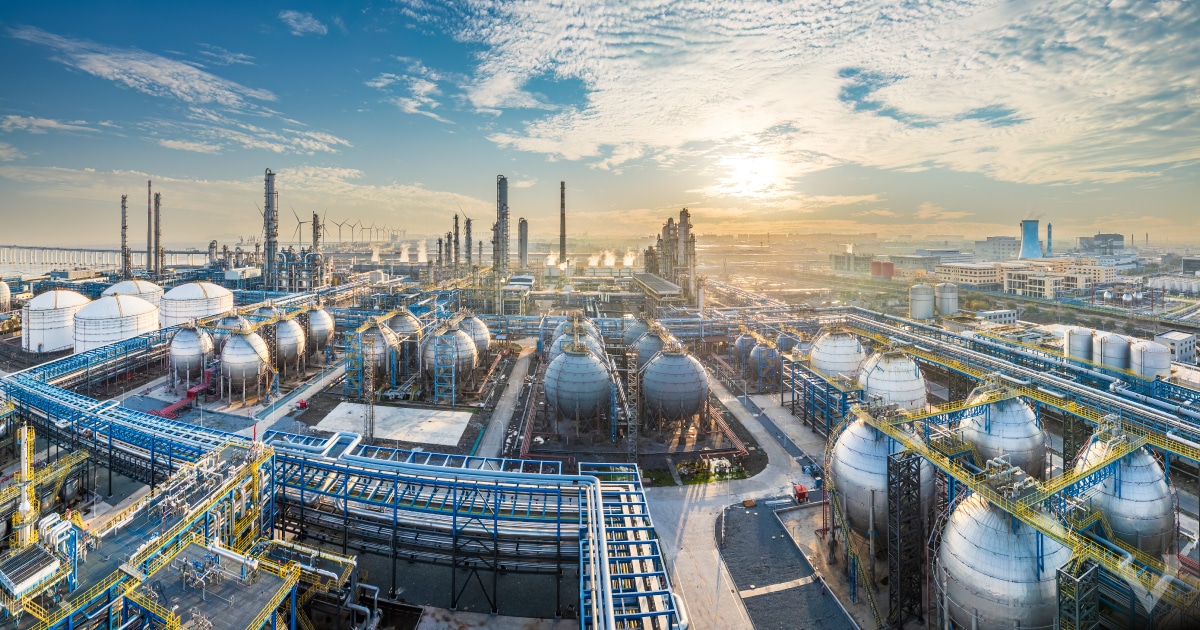
Critical vessels are key process units in chemical and refinery operations. They typically handle high pressures, temperatures, or hazardous materials, meaning failure could result in the release of toxic chemicals, fire, explosions, or runaway reactions.
Facilities use a variety of tools to monitor the health and performance of critical vessels and to ensure their integrity. However, many of these technologies are limited in their effectiveness, increasing the risk that a minor fault goes undetected until it grows into a more significant failure.
Continuous Critical Vessel Monitoring solutions overcome many of these limitations by providing operators with greater access to temperature and performance data. These highly versatile, vessel-agnostic solutions can be used across a range of applications to enhance safety, optimize operations, and reduce maintenance costs.
This article is part of a series on Continuous Critical Vessel Monitoring. To learn more, download our white paper: Improving Safety and Reliability in Petrochemical Plants With Continuous Critical Vessel Monitoring.
Deploying and Using Continuous Critical Vessel Monitoring Solutions
Continuous Critical Vessel Monitoring solutions leverage advanced thermal and visual cameras to provide 24/7 coverage of the entire vessel.
Operators can measure temperature, rate of change, and temperature differential (min/max/average) to immediately detect temperature anomalies and hotspots that could indicate a potential fault.
The ruggedized, HazLoc-certified sensors are designed specifically for Class I and Class II environments, and because they don’t come into contact with the vessel, they are easy to install, maintain, and use.
Typically, petrochemical companies start with a pilot program to better understand the solution’s capabilities and how it fits into their broader Asset Integrity Management Strategy. To gain the most immediate benefits, consider deploying the pilot program in a facility with known issues or with aging equipment that requires more frequent maintenance.
From there, the solution can be rolled out to more production processes and plants, providing operators with a complete view of their facilities from a centralized location.
Early Fault Detection and Warning
While traditional approaches to Critical Vessel Monitoring provide some insight into the health and performance of the vessel, the lack of continuous coverage means that some issues may go undetected until it’s too late.
Continuous Critical Vessel Monitoring solutions detect intermittent or localized temperature fluctuations under a range of operating conditions long before pressure or process alarms are triggered. The thermal cameras provide real-time, full-surface thermal visibility, allowing operators to detect subtle deviations that may precede failure.
Condition-Based Maintenance
Scheduled maintenance, as the name suggests, is performed at regular intervals based on historical maintenance records or usage levels. While this can reduce the likelihood of failure, it also leads to unnecessary or premature maintenance.
Continuous Monitoring allows petrochemical companies to transition toward a Condition-Based Maintenance strategy. Rather than conducting maintenance on otherwise healthy equipment, operators can trigger maintenance at the most cost-effective times based on the actual condition of the asset.
Process Optimization
Continuous Critical Vessel Monitoring serves an important role in improving safety. However, it should not be viewed solely as a safety measure. Implemented effectively, it can also serve as a powerful process optimization and performance enhancement tool.
Continuous Critical Vessel Monitoring supports process optimization by providing real-time, full-field thermal data that reveals how efficiently heat and reactions are distributed within and across a vessel. Thermal cameras can detect temperature profiles that indicate process inefficiencies. By trending these patterns over time, plants can optimize fuel usage, stabilize product quality, and improve yield, all while minimizing waste and improving safety.
Leveraging Temperature Data to Improve Operations
Critical vessels are vital to refinery and chemical manufacturing operations. Continuous Critical Vessel Monitoring solutions provide an additional layer of coverage compared to traditional tools, allowing operators to view a complete temperature profile of the vessel under all operating conditions.
With greater access to data, operators can detect minor faults, implement a Condition-Based Maintenance strategy, and optimize operations.
To learn more about Continuous Critical Vessel Monitoring solutions and how they can be deployed and used in petrochemical facilities, download our latest white paper: Improving Safety and Reliability in Petrochemical Plants With Continuous Critical Vessel Monitoring.