
Case Study: A Real-World Look at Thermal Monitoring in Nucor Steel Production
What We Learned from Nucor Steel About EAF Monitoring
See how Nucor Steel uses continuous thermal monitoring to improve visibility, detect developing issues earlier, and support safer Electric Arc Furnace (EAF) operations. This case study highlights real-world results, including the prevention of ladle breakouts, earlier detection of refractory wear and water leaks, seamless integration with plant control systems, and reduced unplanned downtime through proactive thermal monitoring.
As safety initiatives reshape steel production, operators are being moved further from high-risk areas like the Electric Arc Furnace (EAF). While this improves safety, it also introduces new challenges around visibility and early issue detection.
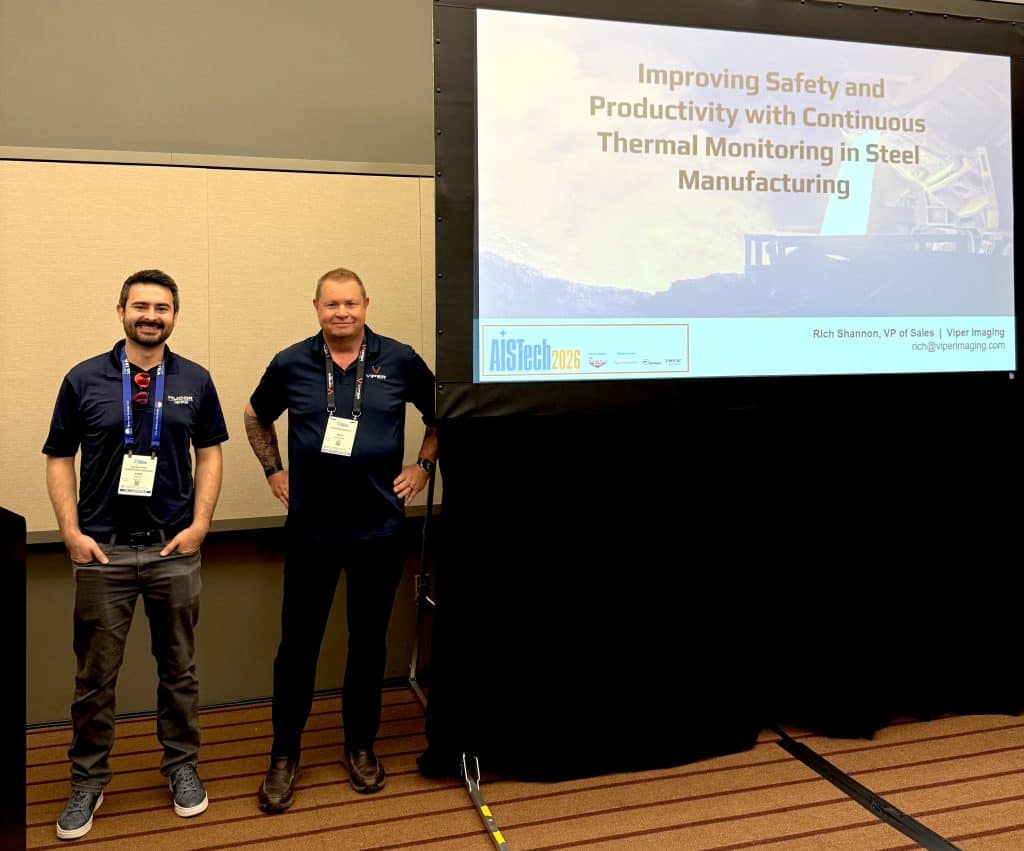
In a presentation at AISTech 2026, we were joined by Alex Lopez, Automation Engineer from Nucor Steel, who shared how his team addressed this challenge using continuous thermal monitoring.
To build on that discussion, here is a deeper dive into the Q&A with Alex – capturing both the challenges and the measurable impact of implementing continuous thermal monitoring. Click here to view the case study in PDF format and have a copy sent directly to your email.

Nucor is the largest steel manufacturer and recycler in North America. The company is made up of a team forged around a vision for leading the industry by providing unparalleled customer care, building trusted partnerships, and creating sustained value. Nucor is leading the charge across industries to create a more sustainable, carbon-free future at the scale of industry and has long been a leader in EAF-based steel production and recycling.
“Moving operators out of high-risk areas isn’t optional anymore.” – Alex Lopez
Like most Nucor facilities, the Memphis plant uses the EAF steelmaking process, which melts recycled scrap steel rather than using traditional blast furnaces. The Memphis facility employs several hundred employees and specializes primarily in engineered bar products made from carbon and alloy steel.
Need for a Solution
What challenges were you experiencing before implementing the thermal monitoring system? What were the potential risks without a monitoring solution?
As safety initiatives have pushed operators further away from the EAF, maintaining visibility has become more difficult. In the past, early warning signs such as a glowing hot spot were easier to catch simply because more people were physically present. Today, with more processes handled remotely (inspections, sanding, tapping), those same issues can go unnoticed for multiple heats.
Even with standard cameras, subtle problems can be easy to miss in a busy environment.
“As we’ve pushed to move teammates further away from the EAF for safety, one of the trade-offs is that we simply have fewer people physically in the area to catch early warning signs.”
“It’s possible for those issues to go unnoticed for several heats… especially on a busy day or if the issue isn’t immediately obvious.”
The Decision Process
Did you try other monitoring methods or solutions that didn’t work? If so, what happened? What were the key factors that influenced your decision to choose fixed constant monitoring?
Alex and his team evaluated several thermal imaging solutions, some of which offered good image quality and data. The issue wasn’t performance – it was integration and practicality.
Like many steel producers, the team at Nucor Memphis aims to stay within standard systems such as VMS, PLCs, and Level 2. Some alternatives required custom hardware, expanded network infrastructure, or ongoing maintenance that were not a good fit for a lean team.
Flexibility was another key factor, especially when it came to camera placement and adjustability.
“A lot of them [cameras] offered good image quality and solid data, but the challenge was integration and practicality.”
“Some of the options we evaluated required custom hardware, extra network infrastructure, or more hands-on maintenance than we were comfortable with.”
“We wanted something that worked like the Axis cameras we have – a single PoE connection and a quick configuration.”
Specific Application and Results
How would you describe the implementation process? Who is currently using the data and images from the monitoring system?
Early implementation included some challenges, particularly around integrating a mix of thermal hardware into existing systems. Once the right solution was identified and initial units were deployed, the process became much more streamlined.
Today, the system is used across both operations and automation:
- Operators monitor thermal views in real time, learning what “normal” looks like and quickly identifying anomalies
- Automation teams feed temperature data into PLCs for early warning alarms and trend the data in historians for deeper analysis
“Once we found the right tools and got a couple units deployed, the rest of the implementation was pretty straightforward.”
“They don’t need to analyze every detail – they just get familiar with what ‘normal’ looks like and can quickly spot when something is off.”
You mentioned the thermal monitoring system has already prevented ladle breakouts. Are there other results you can share that are specific to EAF monitoring?
Beyond preventing major events like ladle breakouts, one of the biggest benefits has been earlier detection of developing issues, particularly refractory wear and damage.
When using standard cameras alone, these problems often evolve gradually and can go undetected until they become critical.
Thermal monitoring provides a clearer, earlier indication:
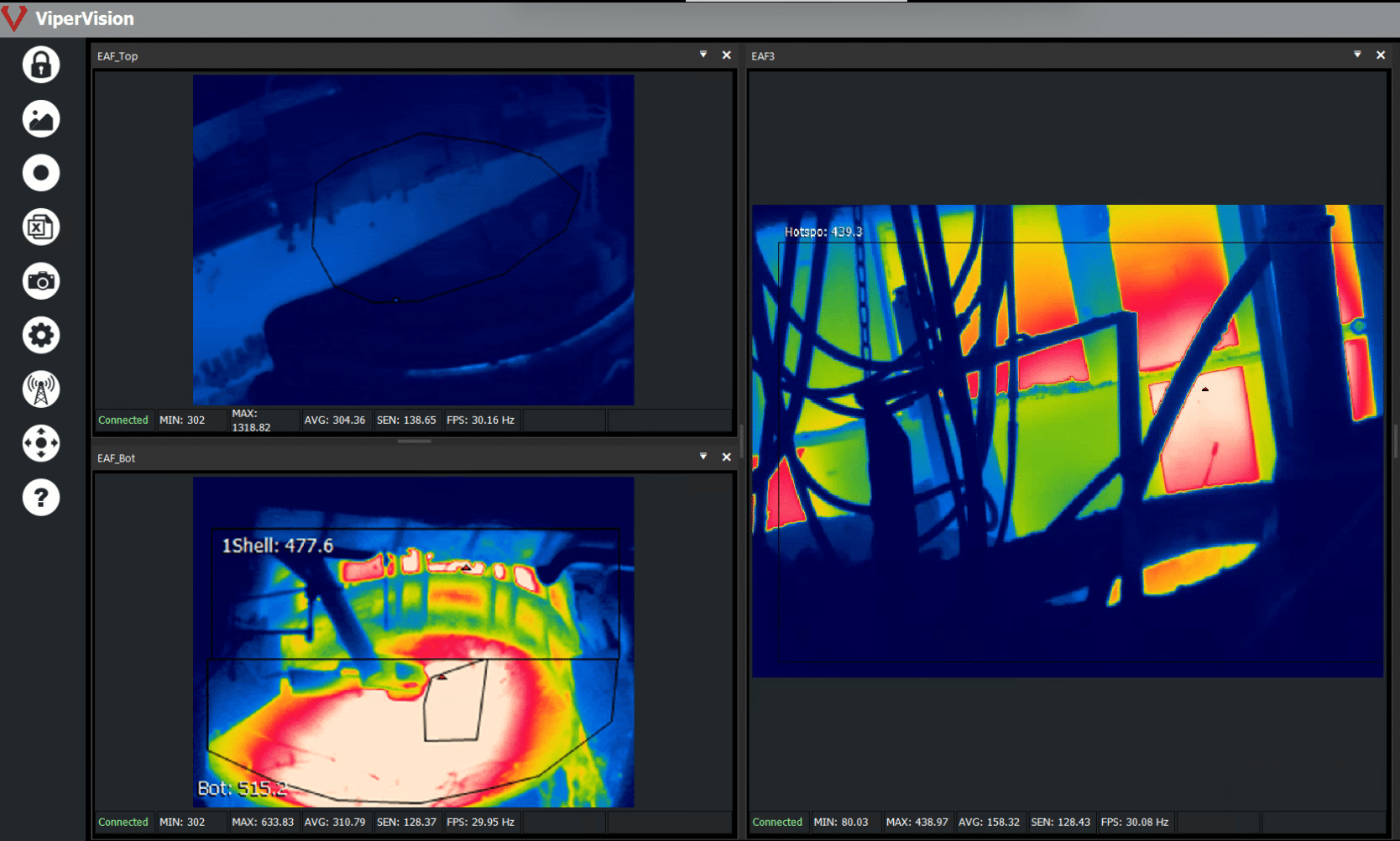
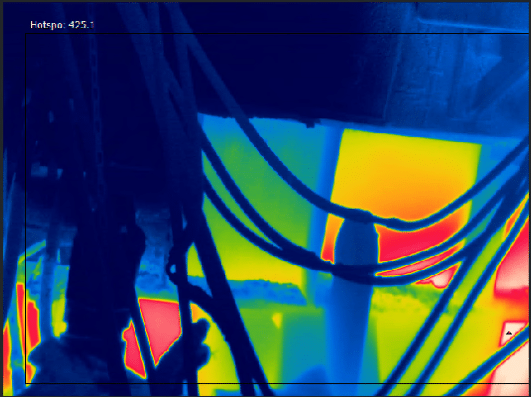
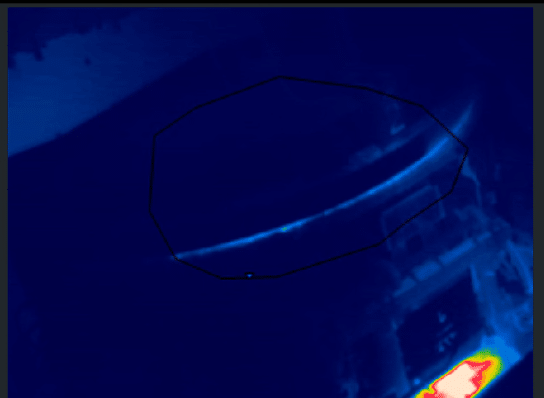
- Detecting both hot spots and cold spots
- Making water leaks immediately visible
- Allowing more time for intervention
“One big benefit is catching issues earlier – especially smaller refractory damage that wouldn’t cause an immediate breakout.”
“With standard cameras, you usually don’t see anything until it’s severe… With thermal monitoring, we can pick up both hot spots and cold spots much earlier.”
“It also helps us safely extend furnace life because we’re making decisions based on real data instead of just assumptions.”
What has surprised you since implementing the system?
One of the most notable takeaways has been the system’s flexibility after initial deployment.
Once installed, cameras can be quickly integrated into both VMS and PLC systems, allowing teams to test, adjust, and optimize placement with minimal effort.
For a lean team, speed and adaptability are especially valuable.
“Using ViperVision, once we install a camera and get it on the network, it only takes about 10 minutes to have it feeding into both our VMS and the PLC.”
“That speed makes a big difference… For a small team, that flexibility is huge.”
Where the Industry is Headed
What trends are you seeing in the steel industry regarding process control, production methods, or industry demand?
Safety continues to be the primary driver across the industry.
There is a clear shift toward removing personnel from high-risk environments and increasing reliance on centralized, remote monitoring systems. Cameras, sensors, and integrated data platforms are becoming essential to maintaining visibility without exposing workers to danger.
At the same time, AI is rapidly emerging as a transformative force.
“Moving operators out of high-risk areas isn’t optional anymore.”
“You’ll see more centralized operations and more reliance on remote monitoring—cameras, sensors, and systems that let you keep full visibility without putting people in harm’s way.”
“The other big trend is AI… things that used to require specialized systems could be done by feeding existing data into machine learning models.”
How can other steel mills benefit from thermal monitoring?
The most immediate and impactful benefit is early detection.
Thermal monitoring allows teams to identify small issues across EAF shells, transformer vaults, and power systems before they escalate into larger problems.
In many cases, that means avoiding unplanned downtime altogether.
“The biggest benefit is early detection.”
“In many cases, that means you can fix something without shutting down.”
“Even in worst-case scenarios, having just a few extra minutes of warning can make a huge difference.”
Conclusion
From limited visibility to proactive control inside the EAF
- Earlier issue detection: Identifying hot spots, cold spots, and refractory wear before they become critical
- Improved safety outcomes: Supporting remote operations while maintaining full visibility into high-risk areas
- Prevention of major events: Thermal monitoring played a role in preventing multiple ladle breakouts
- Faster response times: Even a few extra minutes of warning enables controlled intervention vs. emergency response
- Reduced unplanned downtime: Catching issues early allows for planned maintenance instead of unexpected shutdowns
- Data-driven decision making: Operators and engineers rely on real-time thermal data and historical trends—not assumptions
- Seamless system integration: Thermal data feeds directly into VMS and PLC systems for alarms, monitoring, and analysis
- Operational flexibility: Cameras can be deployed, adjusted, and fully integrated in minutes—ideal for lean teams
“We can pick up both hot spots and cold spots much earlier… we’re making decisions based on real data instead of just assumptions.”

FAQ
Common monitoring applications: AOD, BOF, EAF, LMF, Refractory-Lined Ladles, Substation Assets, and Water Wall Leak Detection
➡️ How does the VMS integration feature work and what systems are compatible?
By selecting RTSP output in the ViperVision camera configuration, users can access critical information through a system they are already familiar with. While the ability to connect directly to a camera in the system has always been available, it provided only the thermal image without temperature measurement details. Now, anyone with permission to access the company’s VMS can obtain critical data at any given time. This advantage is particularly significant for real-time monitoring and response, as the integration offers visibility of all the analysis tools embedded within ViperVision. Additionally, recording can be constant in the VMS if desired.
Notes:
- This feature is available in the ViperVision Ultra software package.
- Compatible VMS as of the study’s publication date include Avigilon, Milestone, Exacqvision, and Orchid Fusion. Further testing will confirm new additions.
- Company engineers maintain control of the ViperVision configuration. While those who view data through the VMS can initiate recording, they cannot adjust the software configuration.
➡️ How does the alarming feature integrate into other systems?
When a thermal camera detects a significant temperature increase or abnormal heat pattern, it can trigger an alert, notifying operators or automatically shutting down a specific operation. ViperVision software supports communication standards for connection to the plant control system including OPC, Modbus, select Allen-Bradley, or Siemens PLC via OPC or S7 Protocol, as well as physical I/Os such as relays and analog outputs. It can send a discrete signal into your system through external I/O devices or the camera’s built-in I/O. This integration enables rapid response, minimizing the time between detection and remedial actions.
➡️ Will the system still work in highly contaminated areas?
Our Viper Predator Kits use advanced thermal cameras with algorithms that mitigate environmental challenges, providing reliable temperature measurements even in adverse conditions. The thermal cameras we use are designed for industrial settings and have an IP67 rating. We install the cameras in our ViperVenom camera enclosures, which provide additional environmental protection. Options such as a front air wipe or air intensifier are added for extremely dusty environments to keep the front window clean and free of contamination. Regular maintenance and calibration of the cameras are also essential to ensure accurate readings.
➡️ How is ViperVision software licensed?
We offer a perpetual license or annual renewal, as well as the option to incorporate the entire system into a HaaS (Hardware as a Service) contract. Benefits of annual renewal and HaaS include software updates since the last renewal date. Review software packages here.
➡️ How do I get more information?
Ready to improve visibility and safety in your operation? Scroll down for additional resources, or contact us now!