
Rethinking Fire Prevention with Continuous Thermal Monitoring
Based on the episode with the same title from the FSJA Leaders in Fire & Safety Podcast, hosted by Duncan J. White.
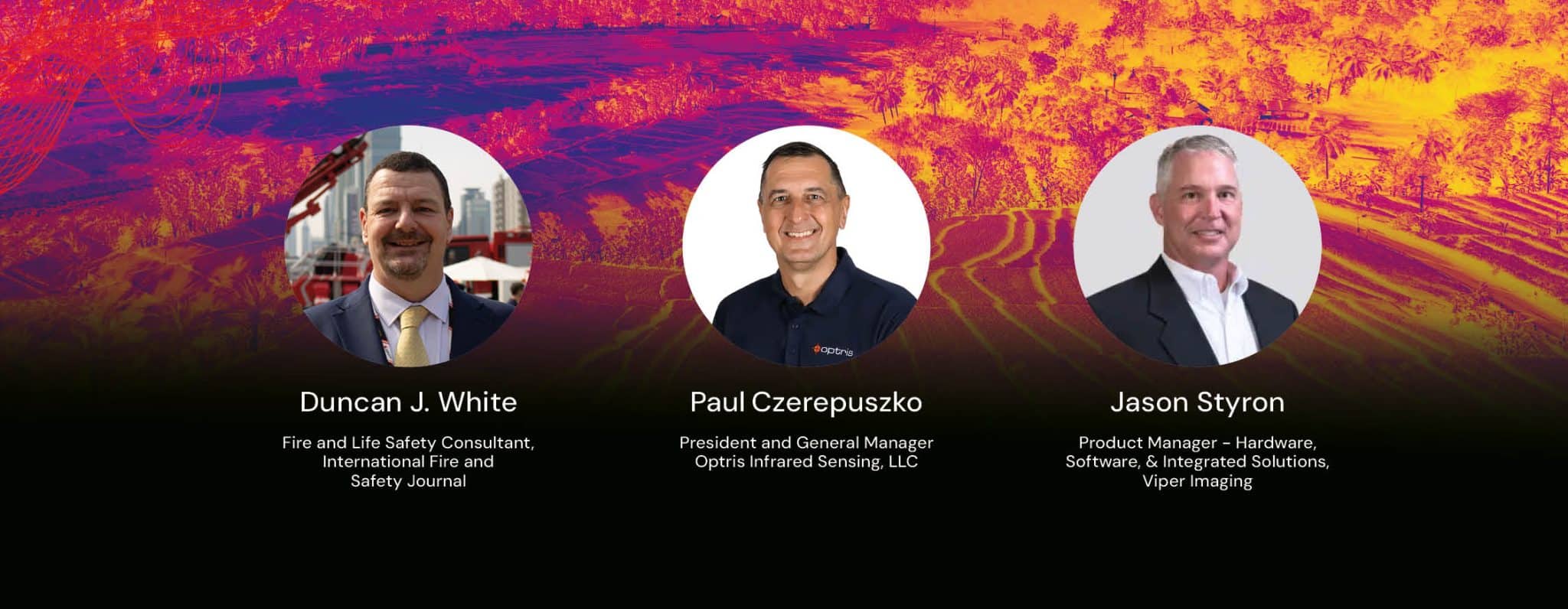
Duncan J. White is joined by Jason Styron, Product Manager at Viper Imaging, and Paul Czerepuszko, President of Optris IR Sensing, to discuss how continuous thermal monitoring is changing the way industrial facilities approach early fire detection, moving from reactive response to proactive prevention.
Continuous thermal monitoring helps industrial facilities identify abnormal heat buildup that can signal a developing fire risk, potentially before smoke or flames are visible. In a podcast discussion, Viper Imaging Product Manager Jason Styron and Optris IR Sensing President Paul Czerepuszko explain how continuous temperature data, carefully configured alarms, and integration with plant systems can support earlier intervention.
An overheating bearing or a hotspot in stored material can develop between routine inspections. For facilities managing combustible materials, large storage areas, or equipment that runs around the clock, detection timing matters.
In Rethinking Fire Prevention with Continuous Thermal Monitoring, podcast host Duncan J. White is joined by Jason Styron, Product Manager at Viper Imaging, and Paul Czerepuszko, President of Optris IR Sensing. Their discussion explores how fixed thermal cameras help industrial facilities recognize developing risks and move toward a more proactive approach to fire prevention.
Monitoring heat between inspections
Handheld thermal cameras are useful for maintenance inspections and investigating potential problems. As Paul explains, however, an inspection captures conditions at a particular moment. A heat source can develop later, including overnight when no one is making inspection rounds.
Fixed thermal cameras provide continuous observation of the areas they are positioned to monitor. When abnormal heat becomes visible to the camera, the system detects the change and can generate an alert. That ongoing visibility can allow facility personnel to investigate and address a problem before it escalates.
Turning temperature data into early warnings
Jason emphasizes the importance of temperature measurements alongside thermal images. The cameras provide digital temperature data that Viper uses to monitor specific areas within an image and configure alarms for the application.
Those alarms can respond to a temperature exceeding a defined threshold or to how quickly the temperature is rising. Monitoring the rate of change helps identify a developing condition that warrants attention, even as temperatures continue to change.
The value comes from applying that information to the facility’s actual risks. Viper combines the camera data with monitoring software and system architecture to deliver alerts that support a timely response.
Reducing nuisance alarms builds confidence
A continuous monitoring system needs alarms that personnel can trust. Jason explains that frequent nuisance alarms can erode confidence and lead people to ignore notifications.
“We want to make sure that when they get an alarm, it’s an alarm that they need to take action on,” Jason says.
That means monitoring temperature in the appropriate locations and selecting alarm settings and detection methods that fit the process. Jason also describes feeding data into a facility’s PLC or SCADA system through the appropriate communication protocols. Connecting monitoring to those systems helps deliver information where personnel already manage operations.
A wood products example makes the risk tangible
Jason describes an OSB (oriented strand board) mill, where dust can accumulate around motors, bearings, and other equipment. Some of these areas are difficult to access, making developing problems harder to notice.
In the scenario he outlines, a bearing begins to wear and overheat while combustible dust accumulates nearby. Heat can build before visible smoke or flames appear. Thermal monitoring helps identify abnormal surface temperatures in the camera’s view, giving personnel a reason to investigate.
The example shows how equipment condition and fire risk can overlap. Recognizing a developing hotspot allows a facility to address the source of heat before it ignites surrounding material.
Camera coverage is part of the solution
Jason identifies line of sight as a central requirement for early fire detection. Cameras need a view of the areas where heat may develop. Large storage spaces, obstructed equipment, and facilities with multiple corners or aisles can require several camera positions.
The discussion covers applications ranging from wood products and coal stockpiles to recycling facilities, battery storage, industrial laundries, and data centers. Each presents different monitoring needs. Camera placement and coverage must account for the physical layout and the locations of potential heat sources.
Paul notes that thermal imaging technology has become more accessible as cameras have become smaller and less expensive. Jason connects that progress to the practical challenge of providing coverage across large areas where many cameras may be needed.
Taking action before a fire prompts the conversation
Both guests describe situations in which customers sought thermal monitoring after experiencing a fire. Their discussion encourages facilities to consider continuous monitoring earlier, when there is still an opportunity to evaluate risks and plan coverage before an incident occurs.
For industrial operations, that begins with identifying the equipment and material storage areas where abnormal heat could develop. Continuous thermal monitoring can then support earlier awareness, with alarms that help personnel decide when and where to respond.
Listen to the podcast
Explore the discussion in Rethinking Fire Prevention with Continuous Thermal Monitoring to hear more from Jason Styron and Paul Czerepuszko. Click here for the full episode.
Want to explore early fire detection for your facility?
Contact Viper Imaging to discuss your application and how continuous thermal monitoring could support your fire prevention efforts. Additional resources are also linked below.