
Why Multi-Sensor Monitoring Is Changing the Way Facilities Manage Rotating Equipment
A discussion on rotating equipment monitoring and predictive analytics
Modern industrial operations are moving beyond traditional vibration analysis to embrace multi-sensor predictive maintenance. By integrating acoustic ultrasound, magnetic field measurement, temperature monitoring, and advanced analytics, facilities can identify early-stage mechanical and electrical faults that vibration alone often misses. This comprehensive approach transforms raw data into actionable insights, allowing teams to prioritize critical assets, reduce unplanned downtime by 50-70%, and lower maintenance costs.
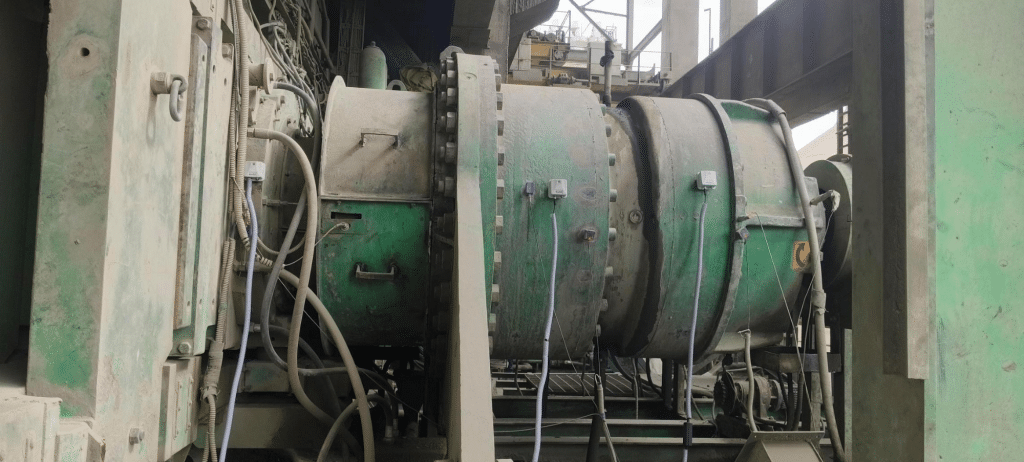
Rotating equipment is the heart of nearly every industrial operation. Pumps, motors, fans, compressors, turbines, and gearboxes keep production moving, but they’re also common sources of costly unplanned downtime. Traditionally, facilities have relied on scheduled maintenance or vibration analysis to diagnose developing problems. While these approaches remain valuable, today’s maintenance teams face new challenges including lean staffing, aging assets, and increasing pressure to maximize uptime.
Fortunately, advances in condition monitoring are making predictive maintenance (PdM) more practical than ever. Modern monitoring platforms are changing the approach by combining multiple sensing technologies – including vibration, acoustic ultrasound, magnetic field measurement, and temperature monitoring – with advanced analytics. Together, they provide a more comprehensive picture of equipment health. Rather than simply collecting data, these systems help teams identify signs of failure earlier, prioritize repairs, and make more informed maintenance decisions.
To better understand today’s best practices, we spoke with Jason Styron, Product Manager of Hardware, Software & Integrated Solutions, and Tyler Lange, Field Application Engineer for Condition Monitoring. Together, they bring insight from decades of experience helping industrial facilities improve rotating equipment reliability through the latest condition monitoring technologies.
Click here to get a downloadable PDF of the article sent directly to your email.
What’s the biggest misconception about rotating equipment monitoring?
Jason talked about the fact that many facilities believe installing sensors automatically improves reliability. In reality, sensors only collect information. An alert is merely the initial step. The real value comes from understanding that data, diagnosing the root cause, and acting before failures occur. Without a strategy to convert alerts into repairs, data becomes noise.
Tyler shared that operations sometimes rely too much on the fact that a sensor is in place, but don’t address the frequency of the readings. The effectiveness of a predictive maintenance strategy relies heavily on data frequency; he has observed instances where data acquisition intervals of 1 to 6 hours failed to detect catastrophic equipment failures.
“An alert is merely the initial step. The real value comes from understanding that data, diagnosing the root cause, and acting before failures occur. ”
If a facility wants to implement a monitoring solution for their rotating equipment, where should they start?
Without hesitation, Jason and Tyler both said facilities should begin by identifying and prioritizing their most production-critical equipment. Tyler also suggested the appointment of a dedicated Condition Monitoring Technician to oversee all installation, data acquisition, and suggested maintenance.
What assets should be prioritized?
Focus on assets where failure causes significant downtime or safety hazards.
What is the necessary baseline information?
It is crucial to collect comprehensive baseline asset information to establish a performance benchmark and ensure the implementation of the correct solution. This baseline data should include:
- specific equipment type and asset nameplates
- standard operating speed
- control type (VFD or constant speed)
- coupling type
- current operating conditions
- application-specific details
How often should data be reviewed?
The frequency is up to the discretion of the customer and the health of their assets. Newer assets can be reviewed less regularly, while older assets are reviewed more routinely. The historical trends and alarm data should be highly visible, easily accessible, and directly connected to the PdM team to ensure immediate action can be taken when a problem is identified.
Why is vibration monitoring alone not enough?
While vibration analysis plays a vital role in PdM, it is not a complete solution. It excels at identifying issues like bearing failures, misalignment, and imbalance, but it cannot detect other critical problems, such as contaminated lubrication or insulation breakdown.
Because certain faults manifest earlier through alternative sensing methods, relying solely on vibration means missing key warning signs. This highlights the value of utilizing comprehensive sensors that track temperature, acoustics, and magnetic flux leakage.
What does acoustic ultrasound offer?
Acoustic ultrasound detects high-frequency sound generated by friction, structural stress, and lubrication changes – often revealing developing faults before vibration levels noticeably increase. This enables maintenance teams to step in at the initial stages of degradation, effectively preventing asset failure.
How do magnetic field measurements help identify motor issues?
Magnetic field measurements help identify issues of harmonic distortion, frequency, and flux. Magnetic flux monitoring more accurately senses electrical issues like stator winding faults or broken rotor bars. This method, combined with vibration analysis, can be used to find early-stage electrical faults, premature component wear, and other internal electric motor failures.
How do you build a successful predictive maintenance program?
What are common mistakes that reduce the effectiveness of PdM programs?
Jason’s first thought was that maintenance teams sometimes rely solely on vibration analysis, which inevitably creates blind spots. Tyler shared that ignoring warning signs is more common than we’d like to think, and insufficient organizational engagement and poor communication are also prevalent issues.
What separates condition-based monitoring (CbM) from predictive maintenance (PdM)?
CbM centers on the systematic collection of equipment health data through advanced sensing technologies, including vibration, acoustic ultrasound, and magnetic field measurement. PdM is strategically applying gathered data to drive informed maintenance activities. As its name suggests, a PdM approach uses insights from the monitoring program to forecast optimal service intervals and execute repairs based on actual asset condition rather than arbitrary schedules.
How much historical data is needed for meaningful trends?
Tyler stated that this varies on several factors, including data acquisition frequency, environment, application, and assets. His rule of thumb is to get 100 valid measurements to create meaningful trends. Depending on the data acquisition frequency and other factors, that could be days or months.
Establishing a comprehensive health picture could require up to several months of continuous data. This accounts for seasonal and load variations, providing the accurate modeling needed for long-term PdM.
What does a “good” predictive maintenance program look like?
Successful predictive maintenance focuses on critical assets – pumps, fans, and motors – whose failure stops production. Instead of overwhelming teams with data, it provides actionable insights from continuous assessments using vibration, acoustics, and magnetic flux measurement sensors. This allows for proactive scheduling of repairs, typically reducing unplanned downtime by 50-70%¹ and maintenance costs by 18-25%².
What limitations do you commonly see with existing monitoring solutions?
Many facilities find that standard market solutions can be rigid in their deployment. Common pain points include a lack of flexible communication architectures and restricted deployment options that are often exclusively cloud-based.
Functional differences also exist in how data is processed and presented. Jason and Tyler recommend that facilities look for monitoring platforms that do more than collect data. Solutions that combine multiple sensing technologies with automated diagnostics and fault classification help maintenance teams quickly understand what requires attention rather than forcing them to interpret large volumes of raw data.
Can you share examples where monitoring detected a problem before failure occurred?
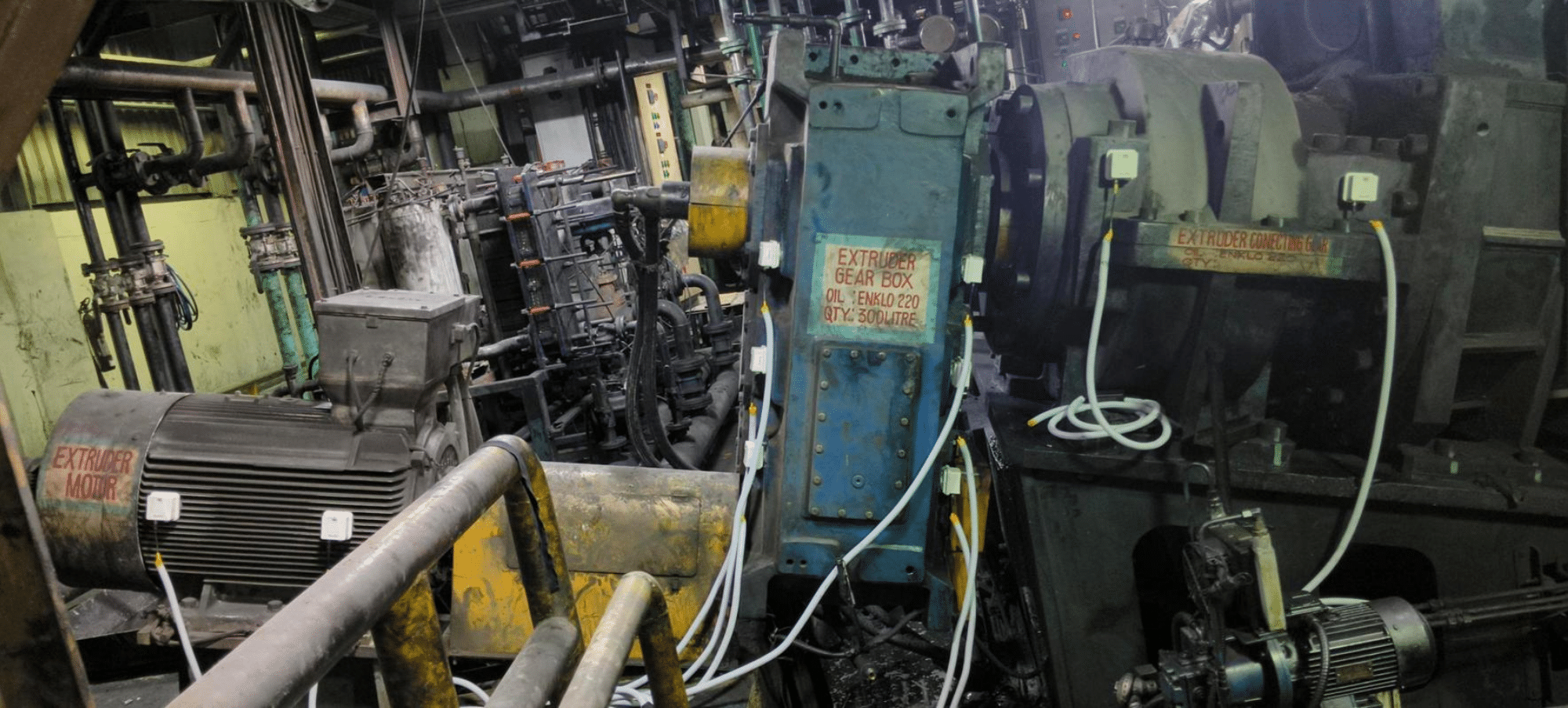
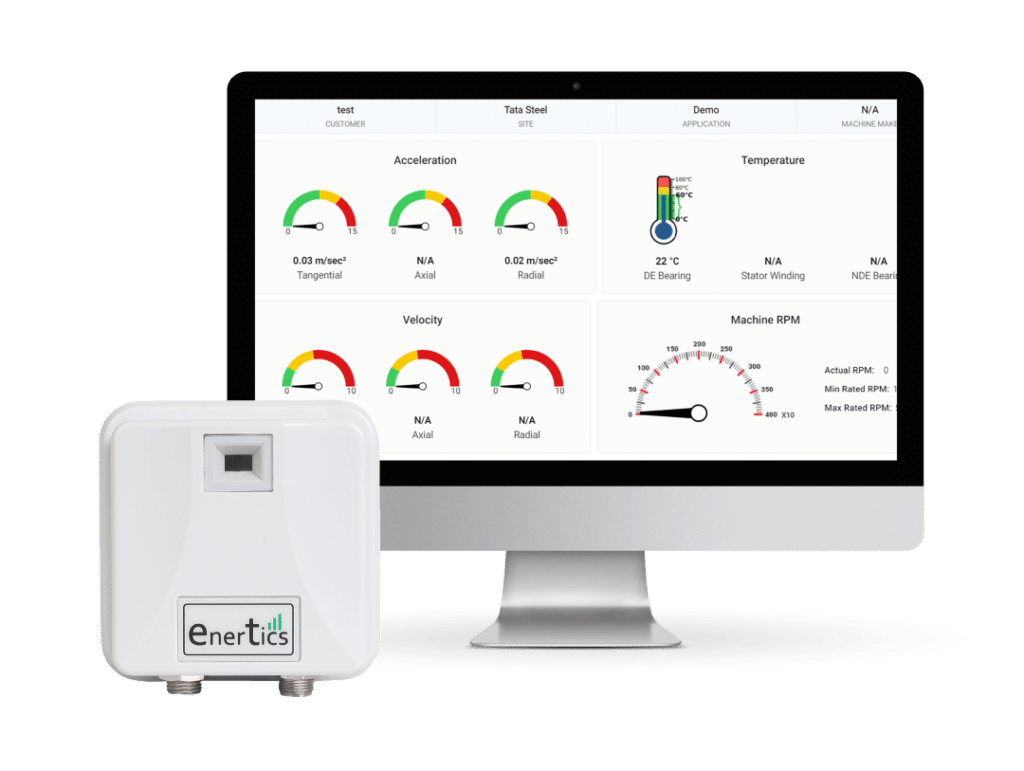
>> Jason shared this success story about a leading integrated steel producer. The facility operates continuous casting and rolling lines with hundreds of motors, gearboxes, pumps, and fans. They deployed an advanced multi-sensor solution. This system combines tri-axial vibration, ultrasound, temperature, and magnetic field measurement into a single sensor, linking directly to on-premises, server-based analytics to identify early-stage issues so maintenance can be planned.
The value of transforming raw data into proactive alerts was proven when the system detected increasing bearing vibration on a caster drive. The platform automatically flagged the asset, providing the early warning necessary to avoid a catastrophic breakdown.
Ultimately, this rapid detection prevented multiple hours of unplanned downtime – a major save given the facility’s operational downtime cost of $100,000 per hour. Following this success, the customer projects that their PdM program will reduce annual unplanned downtime by 35%.
This example illustrates how continuous monitoring and automated analytics transformed raw sensor data into an actionable maintenance decision before production was impacted.
>> In another case study shared by Tyler, a paper manufacturing facility in the Southeastern US successfully utilized vibration and temperature analysis to prevent a catastrophic incident. When a machine spontaneously combusted around 2:00 AM, the monitoring system detected immediate temperature spikes. This critical alert prompted the Maintenance Manager to contact on-site personnel to investigate the equipment.
Thanks to the early detection, the team extinguished the fire before it could spread beyond the two directly impacted assets. While these two pieces of equipment were destroyed and required replacement, the facility prevented the fire from enveloping the rest of the operation. The customer estimated the downtime and repair costs for just the affected assets at approximately $2,000,000, noting that the total financial impact would have been substantially higher had the fire spread further into the facility.
In this case, combining multiple sensing technologies enabled maintenance personnel to respond before a localized equipment failure became a facility-wide emergency.
Functional differences also exist in how data is processed and presented. Jason and Tyler recommend that facilities look for monitoring platforms that do more than collect data. Solutions that combine multiple sensing technologies with automated diagnostics and fault classification help maintenance teams quickly understand what requires attention rather than forcing them to interpret large volumes of raw data.
Conclusion
With rotating equipment becoming more critical to plant performance, the ability to detect developing failures early has moved from a convenience to a necessity. It’s a competitive advantage.
“Predictive maintenance delivers the greatest value when it combines multiple sensing technologies with actionable analytics.”
The consensus from both experts is clear: predictive maintenance delivers the greatest value when it combines multiple sensing technologies with actionable analytics. Vibration remains an essential diagnostic tool, but pairing it with acoustic ultrasound, magnetic field measurements, temperature monitoring, and intelligent software enables maintenance teams to identify both mechanical and electrical issues earlier and with more confidence.
The future of predictive maintenance isn’t about deploying more sensors – it’s about deploying the right combination of sensing technologies and transforming the collected data into actionable insight. Facilities that embrace this multi-sensor, analytics-driven approach will be better positioned to improve reliability, make informed maintenance decisions, and avoid the costly consequences of unexpected equipment failures.
Want to learn more?
Discover how today’s multi-sensor monitoring solutions combine vibration, acoustic ultrasound, magnetic field measurement, thermal monitoring, and advanced analytics to deliver more actionable predictive maintenance insights. Additional resources are linked below.